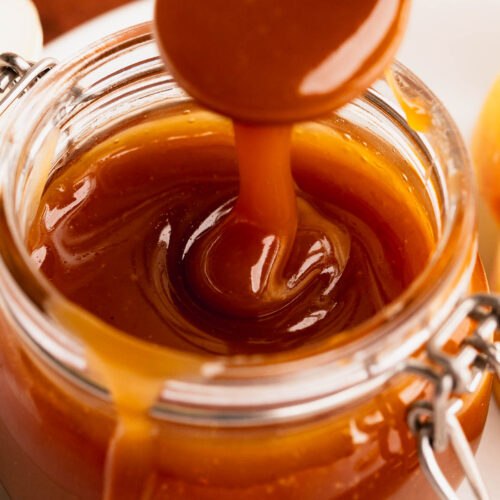
Apple Cider Maple Syrup Caramel Sauce
Elevate your fall small batch desserts with this tart, sweet, and perfectly creamy apple cider caramel made with maple syrup! Inspired by my popular maple syrup caramel sauce, this homemade caramel recipe infuses apple cider into buttery maple syrup to make the best fall-inspired caramel sauce.
Servings: 1 Half Cup
Calories: 66kcal
Ingredients
- 1 cup apple cider reduced to 1/4 cup
- ½ cup pure maple syrup
- 2 tablespoons heavy whipping cream
- 1 ½ tablespoons unsalted butter
- pinch salt
Instructions
- Reduce the apple cider – Add the apple cider to the small saucepan. Over low heat, simmer the apple cider until you have 1/4 cup. Check every 5 minutes until you have 1/4 cup – mine takes about 15 minutes.1 cup apple cider
- Add the maple syrup, cream, and butter. Over medium-low heat, stir the syrup until the butter has melted. Continue to heat the syrup and allow it to lightly boil until it thickens and is heated to around 230 degrees. You don't need to stir the caramel. Too much stirring may cause sugar crystals to form, which will likely crystallize your caramel sauce. Note – I strongly recommend using a digital thermometer because the caramel can quickly thicken and turn into candy beyond 230 degrees.1/2 cup pure maple syrup, 2 tablespoons heavy whipping cream, 1 ½ tablespoons unsalted butter
- Turn off the heat and stir in the salt. Cool the caramel in the pan for 5 minutes, then transfer to a glass jar for storage and serving. Cool in the jar completely at room temperature. You can either serve at this point or transfer to the fridge.pinch salt
- The caramel sauce will last in the fridge for 2 to 3 weeks. It will thicken as it cools. To serve, heat the caramel in the microwave for about 10 to 15 seconds to loosen it up.
Notes
- Serving Size - The recipe can easily be doubled.
- Apple Cider - Be sure it is apple cider, and not apple juice. Apple Cider is unfiltered whereas apple juice is filtered and likely diluted with water.
- Maple Syrup - Pure maple syrup and not pancake syrup!
- Cook to 230 Degrees - Any longer, and you will end up with thick caramel that makes candy caramels!
- Storing - I like refrigerate the caramel sauce in a glass jar to make it easy to heat when serving.
- Freezing - You can freeze the caramel sauce. To do so, transfer to a plastic tightly sealed container. No glass, because we don't want it to break in the freezer! Thaw at room temp, then heat to loosen.
Nutrition
Calories: 66kcal | Carbohydrates: 11g | Protein: 0.1g | Fat: 2g | Saturated Fat: 1g | Polyunsaturated Fat: 0.1g | Monounsaturated Fat: 1g | Trans Fat: 0.1g | Cholesterol: 7mg | Sodium: 3mg | Potassium: 53mg | Fiber: 0.04g | Sugar: 10g | Vitamin A: 81IU | Vitamin C: 0.2mg | Calcium: 18mg | Iron: 0.04mg